Are Granada's Junta Museums Free For EU Citizens?
EU citizens get free entry to Granada's Junta-run museums, including the Museo de Bellas Artes and Casa de los Tiros, while everyone else pays EUR 1.50. Here is how the rule works.
In Short
Yes. Granada's Junta de Andalucía museums, the Museo de Bellas Artes, the Museo Arqueológico y Etnológico and Casa de los Tiros, are free for EU citizens who show accreditation, and EUR 1.50 for everyone else. The Museo de la Alhambra is a different case: it is free for all visitors with no EU condition, because it answers to the Patronato de la Alhambra, not the Junta's museum rule. The rule is a Junta policy, so it does not stretch to the Alhambra, the Cathedral or Parque de las Ciencias.
This question sits inside the Granada free museums guide, which covers every free and conditionally free museum in the city.
Quick Facts
| Question | Answer |
|---|---|
| Which museums are free for EU citizens? | Museo de Bellas Artes, Museo Arqueológico y Etnológico, Casa de los Tiros |
| What counts as accreditation? | Proof of EU nationality, such as a national ID card or passport |
| What do non-EU visitors pay? | EUR 1.50 at the same museums |
| Is the Museo de la Alhambra covered? | No, it is free for everyone under the Patronato, not the Junta rule |
| Closing day | Mondays, with limited exceptions the day before a public holiday |
| Does the rule cover the Alhambra or Cathedral? | No, those follow the Patronato and Archdiocese schemes |
Are Granada's Junta Museums Free For EU Citizens?
Yes, free, but only for EU citizens who show accreditation, and only at museums run by the Junta de Andalucía. The Junta's own wording is blunt: accredited EU citizens enter free, visitors from other countries pay EUR 1.50. The rule covers the Museo de Bellas Artes, the Museo Arqueológico y Etnológico and Casa de los Tiros in Granada. It is a regional museum policy, not a citywide free-entry pass.
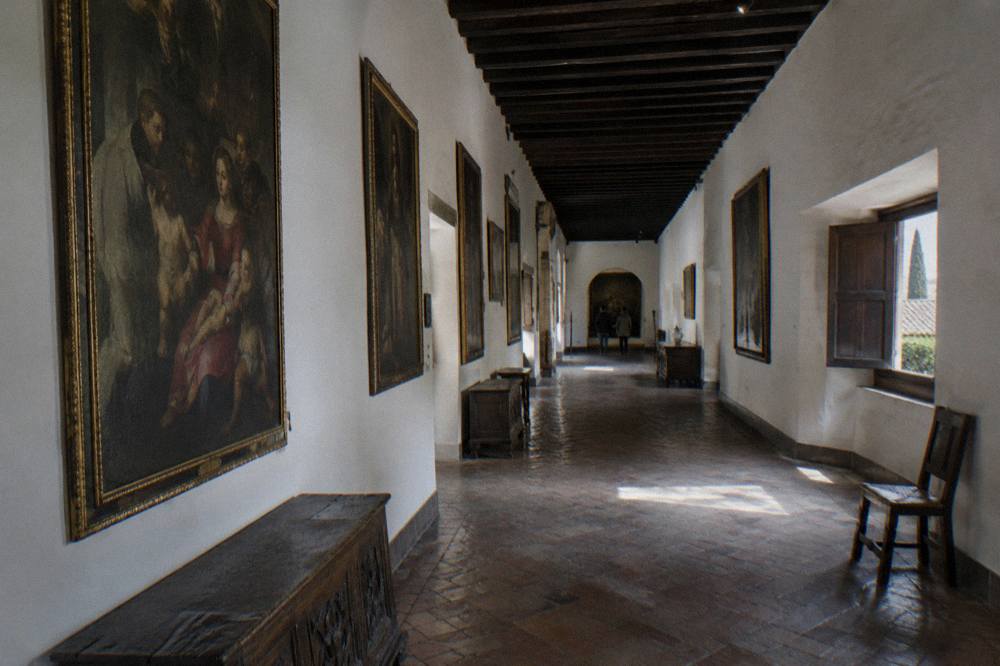
The policy comes from the Junta de Andalucía, the regional government of Andalusia, which runs the network of public museums across the region. Granada's slice of that network holds some of the city's most rewarding collections: Spanish Renaissance painting inside the Palacio de Carlos V on the Alhambra hill, archaeology in the Casa de Castril on the Carrera del Darro, and the historic house and collections of Casa de los Tiros on the Pavaneras slope. One ticket rule governs all of them, and it is unusually generous by European standards. A Euro or two is closer to a token than a price, and for a large share of European visitors it is nothing at all.
The word that carries the weight in the official wording is "accredited". Free entry is not granted by accent or by assumption; it is granted by showing proof of EU nationality at the desk. A national identity card or a passport does the job. Without one of those, staff apply the standard rate, and the standard rate at these museums is EUR 1.50. There is no halfway category printed on the pages this site draws from, no youth discount or senior rate listed alongside, so the honest summary is binary: accredited EU citizens free, everyone else EUR 1.50.
It helps to be clear about what this rule is not. It is not the Alhambra scheme, where the monument is paid, about EUR 22 for the general day visit, under-12s go free with a ticket, and a handful of hill features like the Palacio de Carlos V and the Museo de la Alhambra cost nothing. It is not the Archdiocese scheme either, where the Cathedral is EUR 10 until 28 November 2026 and then EUR 7, with Tuesday free entry reserved for residents of Granada province at the Cathedral and Royal Chapel only. Each regime has its own operator, its own conditions and its own logic, and mixing them is the fastest way to plan a day around a free entry that does not exist.
One caution belongs here. The EU free rule at the Junta museums is recorded from the Junta's museum pages quoted in this site's research, and museum networks do adjust their terms. The figures above match what the official pages say, and the Junta's directory page for the Museo de Bellas Artes is the page to confirm before you build an itinerary around it. This is exactly the kind of site whose whole business is free things to do in Granada, and even here the free museums earn a hedge and a link rather than a flat guarantee.
Before museums, most visitors orient themselves on foot, and the free walking scene is the cheapest possible way to do it. This site lists 25 pay what you want walks in the city, run by independent local guides on GuruWalk and freetour.com, and a walk through the historic centre pairs naturally with a museum afternoon because so many of the meeting points sit within a few streets of the museum doors.
Which Junta Museums Are Free For EU Citizens?
Three Granada museums sit under the Junta rule: the Museo de Bellas Artes in the Palacio de Carlos V, the Museo Arqueológico y Etnológico in the Casa de Castril, and Casa de los Tiros. EU citizens with accreditation enter all of them free; other visitors pay EUR 1.50. The Museo de la Alhambra is often lumped in with them, but it is run by the Patronato and is free for everyone, no EU condition attached.
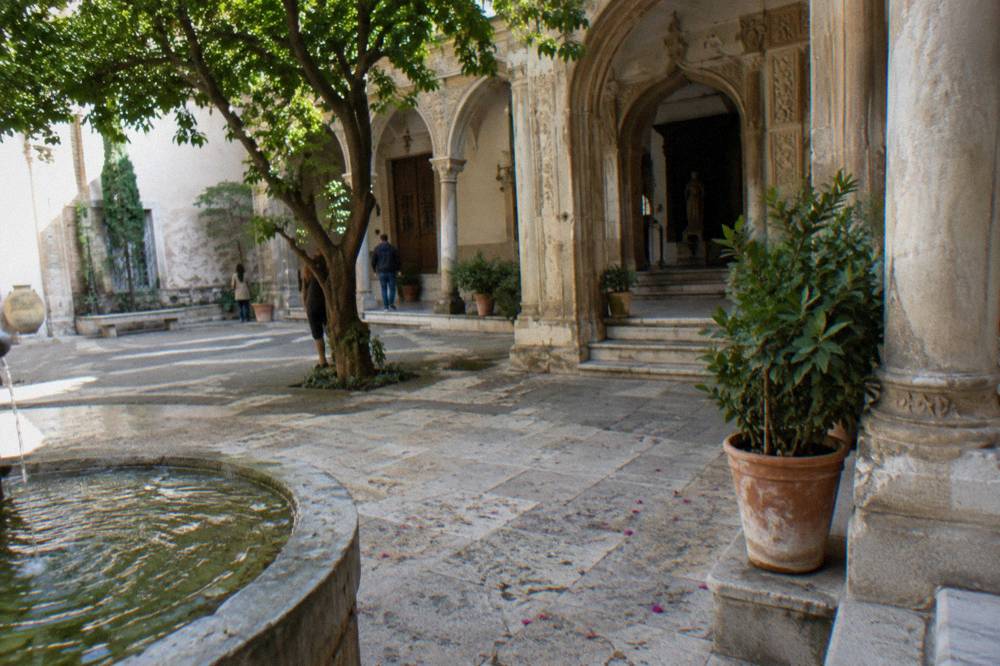
The Museo de Bellas Artes de Granada is the heavyweight of the trio. It occupies the Palacio de Carlos V, the circular Renaissance palace inside the Alhambra complex, and its collection leans hard into Spanish painting and sculpture. The detail that surprises people is the location: because the Palacio de Carlos V sits in the Alhambra's free public zone, you can reach both the palace building and the Museo de la Alhambra next door without a monument ticket. The Nasrid Palaces, the Alcazaba and the Generalife are another story entirely, paid and strictly time-slotted, but the museum side of the hill is the free side. Under the Junta rule, an accredited EU citizen walks into the Bellas Artes for nothing and a visitor from anywhere else pays EUR 1.50.
The Museo Arqueológico y Etnológico sits at Carrera del Darro 41-43, in the Casa de Castril, one of the old aristocratic houses on the river street below the Albaicín. Its hours follow the Junta's seasonal pattern: from 16 September to 15 June it opens Tuesday to Saturday 09:00-21:00 and Sundays and public holidays 09:00-15:00, closed Mondays except the eve of a holiday; the summer stretch from 16 June to 15 September runs Tuesday to Sunday 09:00-15:00. Casa de los Tiros on Calle Pavaneras keeps comparable Junta hours and the same free-for-EU terms, with its carved façade and historic-house interiors a quieter draw than the big museums, well placed if you are drifting between the Plaza Nueva area and the Realejo.
| Museum | Operator | EU citizens | Others | Closed |
|---|---|---|---|---|
| Museo de Bellas Artes (Palacio de Carlos V) | Junta de Andalucía | Free with ID | EUR 1.50 | Mondays |
| Museo Arqueológico y Etnológico (Casa de Castril) | Junta de Andalucía | Free with ID | EUR 1.50 | Mondays |
| Casa de los Tiros | Junta de Andalucía | Free with ID | EUR 1.50 | Mondays |
| Museo de la Alhambra | Patronato de la Alhambra | Free, no ID condition | Free | Mondays |
The Museo de la Alhambra deserves its own sentence because it is the record most often confused with the Junta trio. It is inside the same Palacio de Carlos V as the Bellas Artes, it is free to enter independently of any monument ticket, and its free status comes from the Patronato's own hours page, not the Junta's EU rule. A Brazilian visitor, a British visitor and a Belgian visitor all enter the Museo de la Alhambra on identical terms, free, while only the Belgian among them clears the ID check at the Bellas Artes a floor away. That single-building contrast is the clearest illustration of why Granada's free-entry regimes must never be merged. The Patronato's opening hours and prices page states the hill's terms, and the Junta's museum information page states the EU rule the trio runs on.
What Do Other Visitors Pay?
Visitors from outside the EU pay EUR 1.50 at each of the three Junta museums, one of the cheapest museum rates in Europe even at full price. Under-12s are generally free at Granada's cultural sites, and the Junta pages also list free or reduced entry for accredited over-65s, students, people with at least 33 percent disability and ICOM members. Do not expect the rule to reach Granada's headline sights.
The EUR 1.50 figure is worth putting in context, because Granada's paid attractions sit at the other end of the scale. The Alhambra's general day visit runs about EUR 22, the Cathedral is EUR 10 until 28 November 2026 and EUR 7 after, the Capilla Real is EUR 7, and Parque de las Ciencias, often mistaken for a free city museum, is a paid science centre at EUR 10. Against that backdrop, three museums for the price of a small coffee is barely a decision. A mixed group of EU and non-EU travellers can visit all three Junta sites together and the non-EU members will spend less than EUR 5 total on culture for the day. More of these guides are collected on Free Things To Do In Granada.
The discounted and free categories beyond the EU rule matter for planning. The Casa de los Tiros page, one of the sources behind this site's records, lists free entry for accredited EU nationals, students, over-65s, retirees, people with at least 33 percent disability and ICOM members, with the EUR 1.50 rate applying to everyone else. The Bellas Artes and Arqueológico pages run on the same Junta framework, so a student with a valid card from any country, not only the EU, has a plausible claim to free entry, though the museum desk makes the final call on what accreditation it accepts. Carry the card you intend to use and expect it to be read.
| Visitor type | Junta museums | Cathedral | Alhambra |
|---|---|---|---|
| Accredited EU citizen | Free | EUR 10 until 28 Nov 2026, then EUR 7 | About EUR 22 |
| Other visitors | EUR 1.50 | EUR 10 until 28 Nov 2026, then EUR 7 | About EUR 22 |
| Under 12 | Free | Free with adult, ticket required | Free with ticket |
| Granada-province residents | Free as EU citizens, plus the diocesan schemes at the Cathedral and Royal Chapel on Tuesdays | Free Tuesdays (residents only) | Paid; a residents Sunday scheme exists but its terms are unresolved |
Two lines of caution go with that table. First, the residents' Tuesday free entry at the Cathedral and Royal Chapel is for residents of Granada province with proof, and no tourist qualifies, so do not fold it into a visitor's itinerary. Second, the Junta hours and the EU rule are recorded from official pages at medium confidence, quoted through this site's research rather than read line by line at the desk, so treat EUR 1.50 as the working figure and check the museum's own page if the visit is the centrepiece of a day.
Which Free Walking Tours Meet In Granada?
The free walking tours meet at fixed central points: Secrets of the Centre meets at Calle Mesones by the El Suizo building, Walk in Granada: Essential meets at Plaza Nueva, and Walk in Granada: Albaicín meets at the Plaza Nueva fountain. All are pay what you want, all run around two and a half hours, and every walk this site lists is run by an independent local guide on GuruWalk or freetour.com.
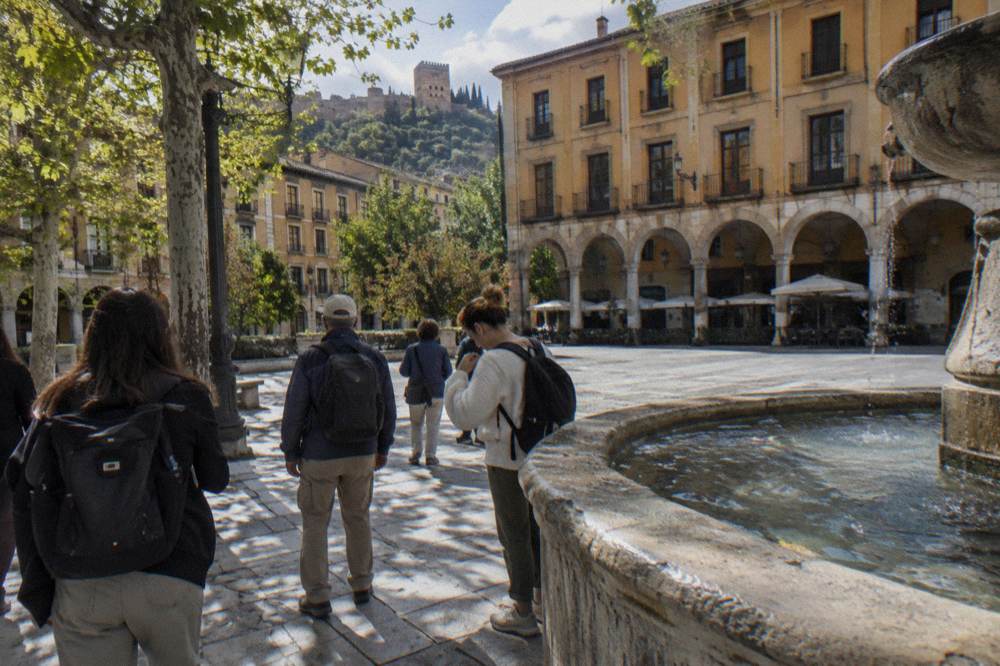
The reason this question belongs on a museum page is geography. The Junta museums cluster where the walks cluster: the Arqueológico opens directly onto the Carrera del Darro, Casa de los Tiros is a short slope from Plaza Nueva, and the Bellas Artes sits up on the Alhambra hill. A morning walk that ends near Plaza Nueva leaves you within walking distance of all of them, with the free museums question answered by whichever ID you carry. For the mechanics of the model itself, the are free walking tours really free piece explains how pay what you want actually operates, and the how much to tip on a free tour question covers the etiquette end.
Secrets of the Centre, run by the guide Gerson on GuruWalk, is the natural museum pairing. It runs 2 hours 45 minutes in English, meets at Calle Mesones by the El Suizo building, and holds 4.89 out of 5 across 344 GuruWalk reviews. Guiding is pay what you want; there is no fee to join. Because it works the historic centre rather than the Alhambra hill, it lands you back in the streets around the Cathedral and Calle Navas, from which every Junta museum is a walk away.
Walk in Granada: Essential, listed on freetour.com, is the volume leader for the centre: 9.4 out of 10 across 5,237 reviews shown on its freetour.com listing, 2 hours 30 minutes, English and Spanish, meeting at Plaza Nueva. The same operator runs the Albaicín version from the Plaza Nueva fountain, so a visitor can do the centre walk and the hill walk on consecutive mornings for the price of the tips alone. None of these walks carries a price tag anywhere in the model, and none needs a museum ticket, though a walk that discusses the Alhambra from outside never substitutes for the paid interiors.
One more pairing is worth naming for museum-goers. The Albaicín walks, several of which meet at Plaza de Santa Ana or Puerta de Elvira, finish within easy reach of the Carrera del Darro and the Arqueológico's door, which makes the Andalusi riverside monuments a natural continuation. The Andalusi monuments, El Bañuelo, Palacio de Dar al-Horra, Casa del Horno de Oro and Corral del Carbón, are free on Sundays and EUR 8.48 Monday to Saturday under the Patronato, a separate regime again from both the museums and the Alhambra ticket. Sunday is the day the free-museum visitor and the free-monument visitor converge.
Mistakes That Trip People Up At Granada's Free Museums
The most common mistake is assuming the EU rule covers the Alhambra or the Cathedral; it covers neither. The second is turning up on a Monday, the closing day across the Junta network, and the third is leaving the passport at the hotel, since free EU entry depends on accreditation at the desk. Treating the Museo de la Alhambra as part of the same scheme is also backwards: it is free for everyone, not an EU privilege.
The Monday mistake deserves emphasis because it quietly ruins more museum plans than any price question. All three Junta museums close on Mondays, with the standard exception of the eve of a public holiday, and the Museo de la Alhambra follows a comparable Monday closure in its Patronato schedule. A visitor who saves the museums for a Monday arrival finds every door shut and the paid sights carrying the whole day. Sunday, by contrast, is the strongest museum day in the city, because the Junta museums are open in the morning and the Andalusi monuments drop their EUR 8.48 charge entirely on Sundays.
The regime-merging mistake is subtler. Granada has, in effect, four different free-entry logics running at once: the Junta's EU rule, the Patronato's free hill parts and Sunday Andalusi monuments, the Archdiocese's resident Tuesdays and Wednesday-afternoon free ticket, and the city's genuinely free public spaces from the Mirador de San Nicolás to the Alcaicería. None of them borrows terms from another. A non-EU visitor who hears "museums are free in Granada" and plans around the Bellas Artes being free will still only spend EUR 1.50, but the same rumour applied to the Alhambra, about EUR 22, or Parque de las Ciencias, EUR 10, produces a genuine budget surprise. The safest habit is to ask which operator runs each site, because the operator determines the scheme, and the scheme determines the price.
Common Questions On This Topic
Are Granada's Junta Museums Free For EU Citizens?
Yes. Accredited EU citizens enter the Museo de Bellas Artes, the Museo Arqueológico y Etnológico and Casa de los Tiros free of charge. Visitors from other countries pay EUR 1.50. Accreditation means showing proof of EU nationality, normally a national ID card or passport, at the entry desk. The rule is specific to the Junta-run museums and applies to no other operator's sites.
Which museums in Granada are free for non-EU visitors?
The Museo de la Alhambra, inside the Palacio de Carlos V, is free for everyone with no nationality condition, and the Palacio de Carlos V itself stands in the Alhambra's free public zone. The three Junta museums charge non-EU visitors EUR 1.50, which is close to free but not the same thing. Granada's other headline museums and monuments, including Parque de las Ciencias at EUR 10, are paid.
What proof of EU citizenship do the museums accept?
The Junta's wording asks for accredited EU citizens, and in practice that means a national identity card or a passport. A driver's licence does not establish nationality and should not be relied on. Students, over-65s and visitors with at least 33 percent disability also appear in the free or reduced categories on the Junta pages, with their own accreditation requirements, so carry the relevant card if you plan to claim one.
Are Granada's museums open on Sundays?
The Junta museums are open on Sundays and public holidays, generally 09:00-15:00 in the winter season pattern. Sunday is also the day the Andalusi monuments, El Bañuelo, Palacio de Dar al-Horra, Casa del Horno de Oro and Corral del Carbón, are free for everyone. Mondays are the closure day for the Junta network, with a limited exception on the eve of public holidays.
Does the EU free rule apply to the Alhambra?
No. The Alhambra is run by the Patronato de la Alhambra y Generalife and its general day visit costs about EUR 22, with under-12s free when they hold a ticket. The free parts of the hill are the Palacio de Carlos V, the Museo de la Alhambra, the Baño de la Mezquita, the woods and the Cuesta de los Chinos, plus Torres Bermejas and Silla del Moro at weekends. None of that comes from the Junta's museum rule.
Can you combine the free museums with a free walking tour?
Yes, easily, since the walks are pay what you want and the meeting points cluster around the centre. Secrets of the Centre meets at Calle Mesones, Walk in Granada: Essential at Plaza Nueva, and several Albaicín walks at Plaza de Santa Ana or Puerta de Elvira, all within walking distance of the Junta museums. Walk in the morning, museum in the afternoon is a workable shape for one day, keeping each museum's Monday closure in mind.