Is Sacromonte Free To Visit?
The Sacromonte hill, its paths and viewpoints are free to wander; the Abadía del Sacromonte charges EUR 7. Here is the exact free-versus-paid split.
In Short
Sacromonte the neighbourhood is free to visit: its streets, the Camino del Sacromonte and the Barranco de los Negros paths are public open ground with no ticket, gate or charge. The Abadía del Sacromonte is the exception, EUR 7 per person on the Archdiocese rates, free for under-12s, with a Wednesday-afternoon free ticket via the diocesan site. Flamenco zambras in the caves are paid shows.
This question sits inside the Sacromonte neighbourhood guide.
Quick Facts
| Question | Answer |
|---|---|
| Is the Sacromonte hill itself free? | Yes, streets and paths are public open space |
| Is the Abadía del Sacromonte free? | No, EUR 7, under-12s free |
| Any free ticket for the abbey? | Wednesday-afternoon free ticket via the diocesan site |
| Are the flamenco cave shows free? | No, zambras are paid shows |
| Free walk meeting points nearby | Plaza de Santa Ana, Puerta de Elvira, Plaza Nueva |
| Free walk platforms | GuruWalk and freetour.com |
Is Sacromonte Free To Visit?
Yes, in the way that matters most: Sacromonte is a hill neighbourhood of public streets and paths, and walking it costs nothing at any hour. The one ticketed building on the hill is the Abadía del Sacromonte, EUR 7 on the Archdiocese of Granada rates with under-12s free. Cave-house flamenco shows are paid evening entertainment, and the free walking tours that cover the district are pay what you want.
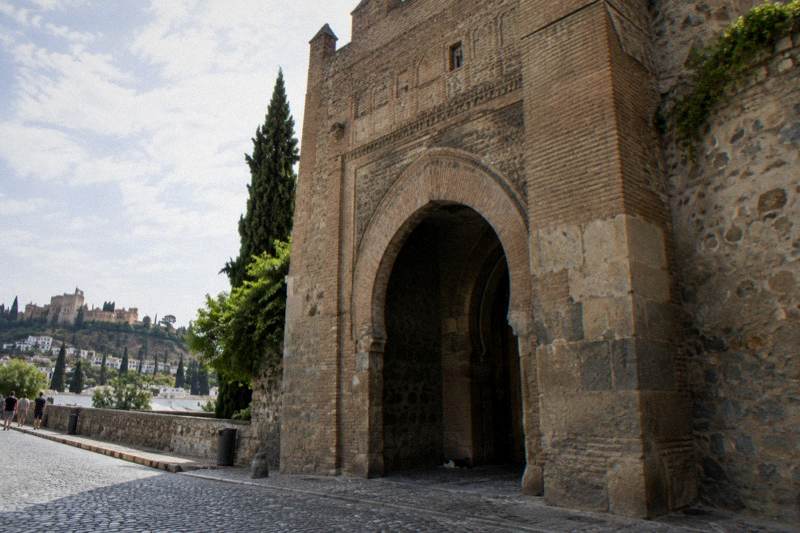
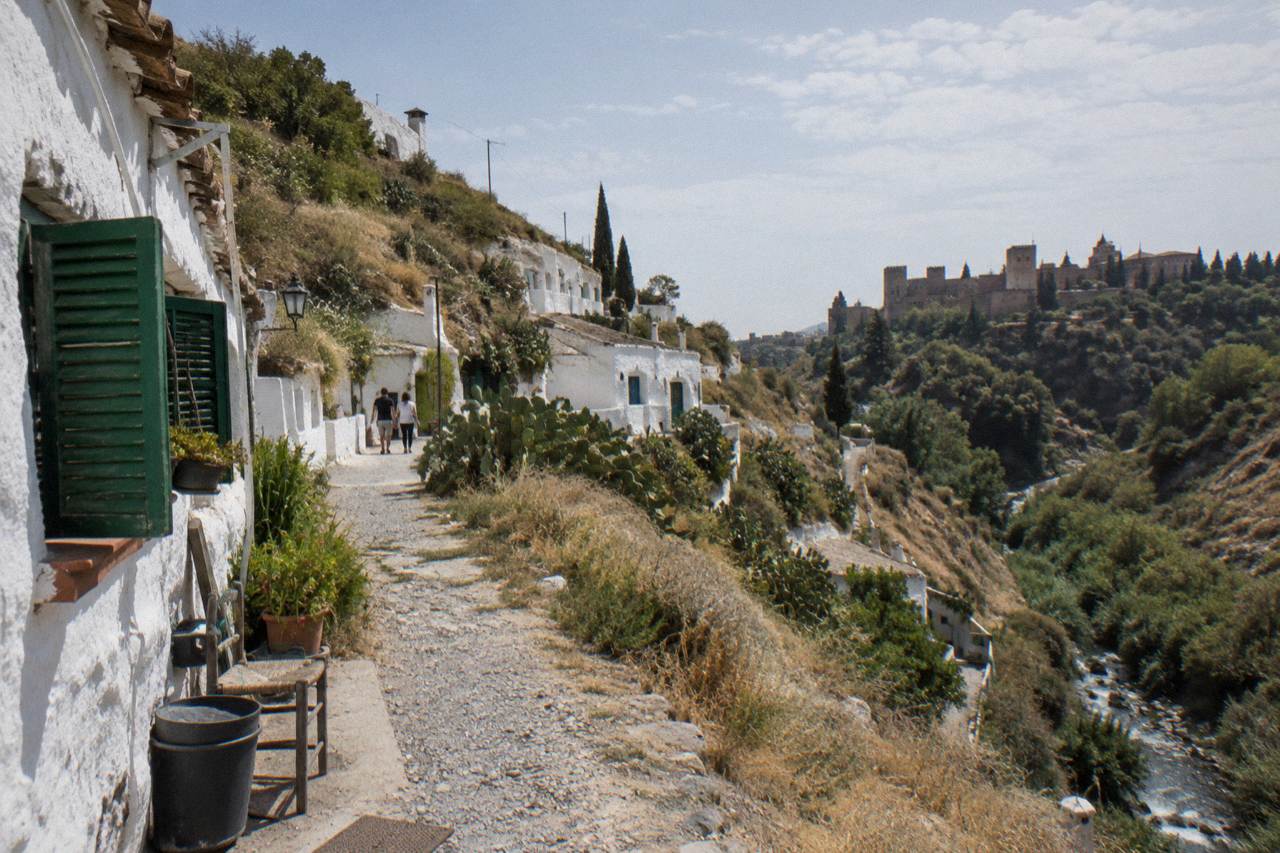
Sacromonte sits on the valley side opposite the Alhambra, east of the Albaicín, and it earns its name from the abbey at its crown. The neighbourhood below the abbey is a web of narrow lanes and whitewashed cave houses carved into the hillside, and every one of those lanes is ordinary public street. There is no gate, no boundary ticket and no visitor fee of any kind on the hill itself. The Camino del Sacromonte, the path that climbs through the cave-house quarter, and the Barranco de los Negros paths on the ravine side are free open ground, listed by Granada's tourism body as public paths with no entry charge.
That answer surprises people because the district's two famous experiences, the abbey and the flamenco zambras, both cost money. A visitor who arrives expecting a monument with a ticket booth finds instead a residential hill where the spending is entirely optional. The budget question is not whether you can see Sacromonte for free; you cannot see it any other way, since the views, the lanes and the cave-house architecture are all outdoors. The question is which of the paid indoor experiences, if any, you add on top.
The free layer is also the deepest one. The hill's cave houses are the historical home of Granada's Roma community and the cradle of the zambra, and all of that living heritage is visible from the street: the chimneys rising from hillsides, the painted cave fronts, the gardens hung over the ravine. Add a free, pay-what-you-want walking tour and a local guide will put names and history to what you are looking at, for whatever you decide to tip at the end. This site tracks 25 such free walks across Granada, several of which meet within a short stroll of the Sacromonte lanes, on the GuruWalk and freetour.com platforms.
For readers planning a wider trip, the pattern repeats across the city: Free Things To Do In Granada breaks down every district the same way, free ground first, ticketed buildings separately.
What Is Free At Sacromonte?
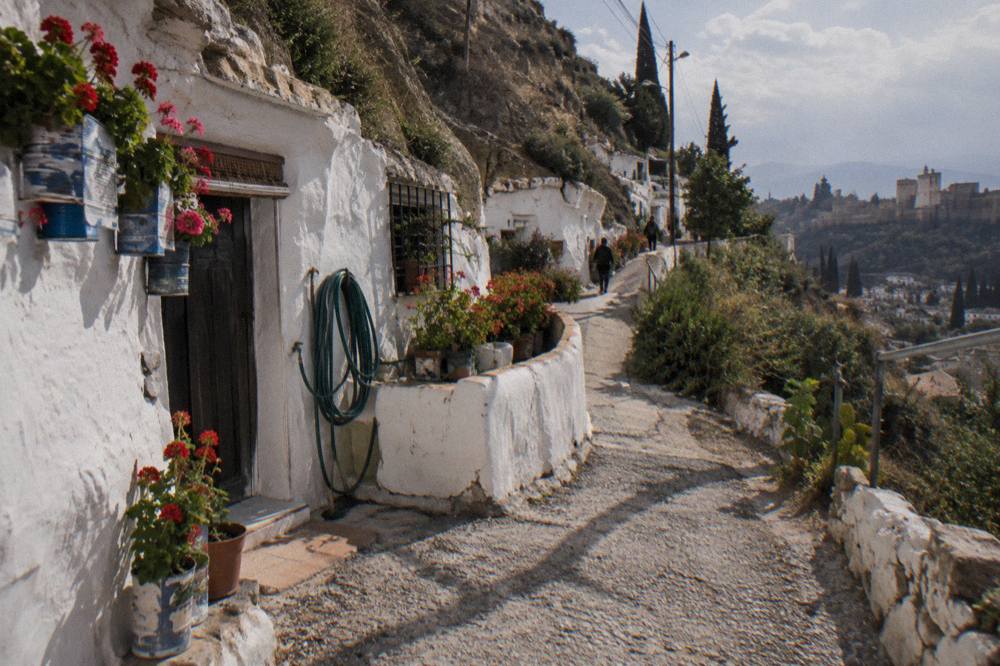
Everything outdoors is free: the lanes of the cave-house quarter, the Camino del Sacromonte that climbs the hill, the Barranco de los Negros paths on the ravine side, and the open views back across to the Alhambra. None of these are monuments with opening hours or tickets; they are public streets and paths, free to be in at any time, exactly like the miradores and squares of the neighbouring Albaicín.
The free list starts with the streets themselves. The cave-house quarter spreads along the Camino del Sacromonte and the lanes running off it, and every one of them is ordinary public highway. Granada's tourism body lists the Camino del Sacromonte and the Barranco de los Negros among the district's free open-air paths: no charge, no operator, no controlled access. What you see from those paths, the cave fronts, the hillside gardens and the frame of the Alhambra on the opposite ridge, is the district's main attraction and it carries no price.
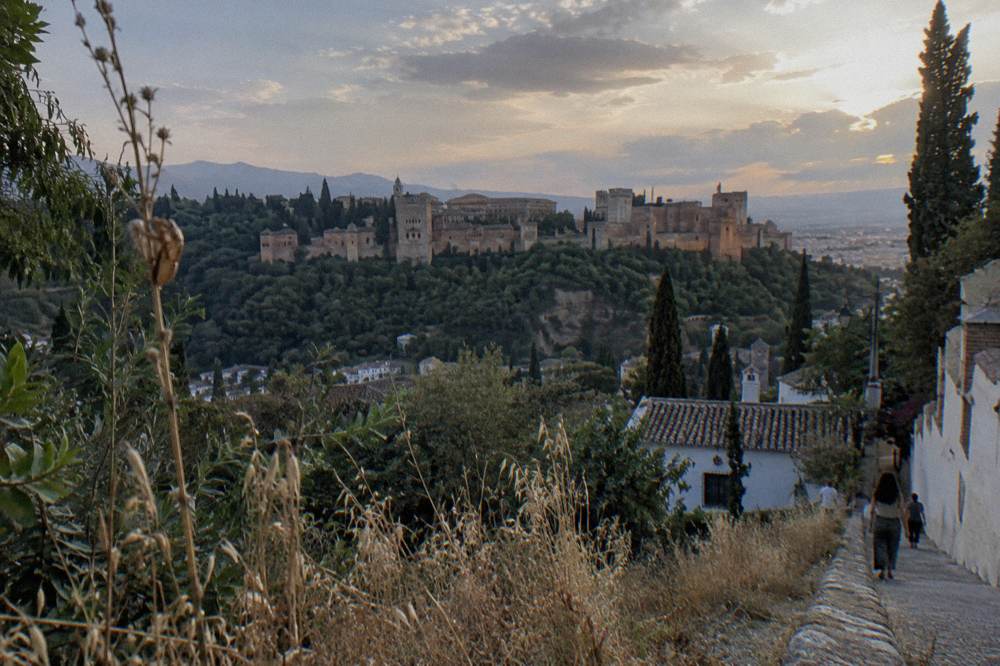
The views work in both directions. From the upper lanes the Alhambra sits across the valley, and the mirador layer of the neighbouring Albaicín, itself free public space, is a short walk downhill. The boundary between the two neighbourhoods is invisible on the ground; Plaza de Santa Ana at the foot of the hill, also free public space, is the practical gateway between them and the meeting point for a cluster of free walks.
Free guiding is the other free layer. Sacromonte has no walk that starts on the hill itself in the current roster, but the district is covered by walks that meet at its edges and in the Albaicín below. Miguelón's Flamenco and Sacromonte, English walk on GuruWalk, rated 4.95 out of 5 across 668 GuruWalk reviews, meets at Puerta de Elvira and runs about 2 hours 30 minutes; it is the walk this site features for the district. On freetour.com, Walk in Granada: Albaicín, 9.5 out of 10 with reviews shown on its freetour.com listing, meets at Plaza Nueva next to the fountain. Both are pay what you want: the guiding is free in the sense that no price is charged up front, and you tip the guide what the walk was worth to you.
What Do You Still Have To Pay For At Sacromonte?
Two things on the hill cost money: the Abadía del Sacromonte, EUR 7 per person with under-12s free, and the flamenco zambras, the cave-house shows, which are paid evening entertainment. The abbey also offers a free Wednesday-afternoon ticket booked through the diocesan site. Everything else on the hill is public street and path.
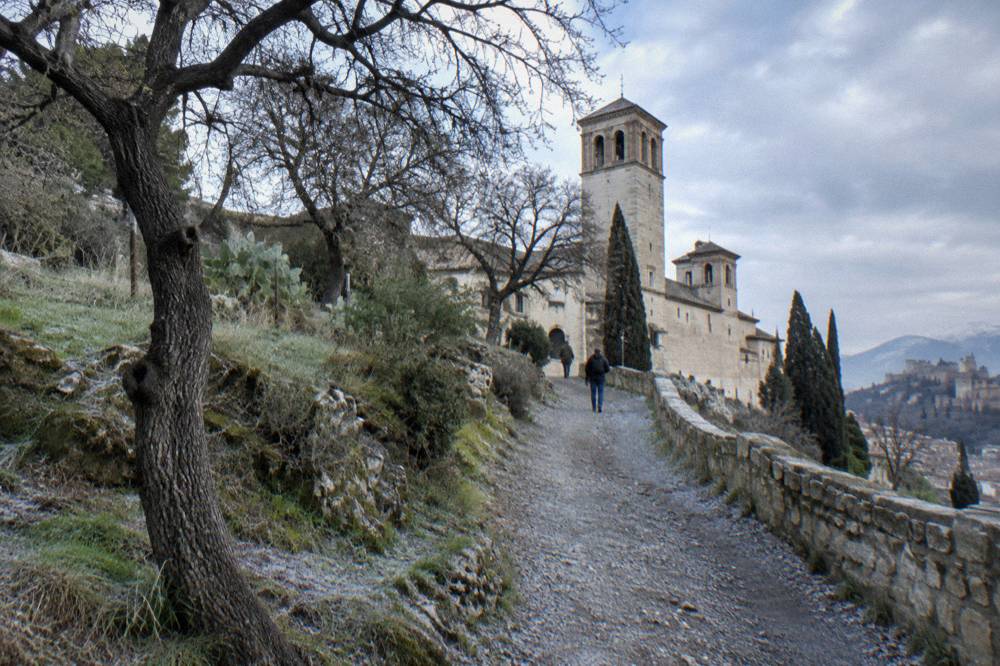
The abbey is the clear-cut case. The Abadía del Sacromonte sits at the top of the hill and charges EUR 7 on the Archdiocese of Granada rates, the same individual rate as the Monasterio de San Jerónimo and the Cartuja de Granada, with a reduced rate of EUR 5 and free entry for under-12s accompanied by an adult. It is worth being precise about why the abbey is not free: it belongs to the Archdiocese regime, whose only resident free scheme, Tuesdays at the Cathedral and Royal Chapel, applies to Granada-province residents and to those sites alone. A tourist cannot qualify for it, and the abbey was never in it. The diocesan rates page does list a free ticket every Wednesday afternoon, issued through the diocesan site, and that is the one genuinely free way in.
The zambras are the other paid item, and they are not a monument fee but show tickets. The cave-house quarters host flamenco zambras, the district's family-run flamenco tradition, and these are commercial evening performances with their own pricing set by each venue; the tourism body's free-entry lists do not include them. No price is printed here because none is verified, but budget for a ticketed show, not a free spectacle. Seeing flamenco culture on the street, by contrast, costs nothing: the cave houses themselves, their painted fronts and their stages' exteriors are all visible from the free lanes.
The honest summary table:
| Item on the hill | Cost | Who runs it |
|---|---|---|
| Streets, Camino del Sacromonte, Barranco de los Negros | Free, public space | City of Granada |
| Abadía del Sacromonte | EUR 7, under-12s free | Archdiocese of Granada |
| Abbey Wednesday-afternoon ticket | Free, via diocesan site | Archdiocese of Granada |
| Flamenco zambras | Paid shows, price per venue | Private cave venues |
| Free walking tours covering the district | Pay what you want | Independent guides via GuruWalk and freetour.com |
The Archdiocese publishes the current rates on its own official rates page, which is the page to check before a visit, since the Cathedral's own pricing shifts after the Kerygma exhibition ends in late November 2026 and sister-site terms can move with it.
When Can You Visit Sacromonte Without Paying?
Any day, at any hour, for the hill itself: the streets and paths are unmanaged public space with no hours and no charge. The abbey's free window is Wednesday afternoons, via a free ticket issued on the diocesan site. The free walking tours that cover the district run on their guides' published schedules, and their meeting points, Plaza de Santa Ana, Puerta de Elvira and Plaza Nueva, are all free squares.
The distinction that answers the question is managed versus unmanaged. Barranco de los Negros and the Camino del Sacromonte are unmanaged: no operator, no gate, no seasonal timetable, so there is no "when" to plan around and no paying version of the same walk. This is the same status the city's tourism body gives the miradores and squares across the river; for the wider picture of which Granada spaces share it, see the guide to Granada's free plazas and squares.
The abbey's free Wednesday-afternoon ticket is the one timed free opportunity. It appears on the diocesan rates alongside the under-12 rule and the resident-Tuesday scheme, and it is booked as a ticket rather than walked into, so the practical advice is to treat it as limited-capacity and reserve ahead on the diocesan site. If Wednesday does not line up with your trip, the paid visit at EUR 7 is the standard route, and the paid Granada Card also lists the abbey among the monuments it covers.
The free tours have their own clock, set by each guide. Walks covering the district cluster in the mornings and early evenings, but schedules live on each guide's own listing page and shift seasonally, so the reliable method is to check the walk's page for the coming week rather than rely on a printed timetable. What does not change is the meeting-point geography: Plaza de Santa Ana at the foot of the hill, Puerta de Elvira on the Albaicín edge, Plaza Nueva in the centre, all free public squares you can wait in without spending anything.
Which Free Walking Tours Meet Near Sacromonte?
Several, all pay what you want, all meeting at the hill's edges: Miguelón's Flamenco and Sacromonte, English walk on GuruWalk meets at Puerta de Elvira, and a cluster of walks meet at Plaza de Santa Ana at the foot of the hill, including Sonia's Albaicín and Sacromonte and the freetour.com Top Tour UNESCO Albaicín. None starts inside the cave-house quarter itself.
The meeting points tell the story best. Plaza de Santa Ana, the square where the Albaicín hands over to Sacromonte, is the gathering point for the densest group: Sonia's Albaicín and Sacromonte (4.93 out of 5 across 305 GuruWalk reviews, Spanish), Cris's Charming Barrios Walk (4.93 out of 5 across 547 GuruWalk reviews, Spanish), the freetour.com Top Tour UNESCO Albaicín (9.3 out of 10 across 409 freetour.com reviews, English and Spanish), and the Spanish-language Alhambra From the Albaicín walk. Puerta de Elvira, a free historic gate on the Albaicín's western edge, hosts Daniel's Classic Albaicín Walk on GuruWalk, 4.94 out of 5 across 936 reviews in English, and Miguelón's Flamenco and Sacromonte walk, 4.95 out of 5 across 668 GuruWalk reviews, also in English.
The English options deserve flagging because many of the hill's walks run in Spanish only. For English speakers the shortlist from the current roster is Miguelón's Flamenco and Sacromonte walk on GuruWalk, Daniel's Classic Albaicín Walk on GuruWalk, and the bilingual freetour.com walks: Walk in Granada: Albaicín (9.5 out of 10, reviews shown on its freetour.com listing) and Top Tour UNESCO Albaicín. The bilingual Graná Highlights walk on GuruWalk, 4.5 out of 5 across 203 reviews, is another option from its meeting point at the Corral del Carbón. Spanish-speaking visitors get the widest choice, including walks dedicated to the free areas of the Alhambra and the viewpoints of the Albayzín.
How these walks work financially is a question in itself, and the honest answer is on the operator's own terms: guiding is free at the point of booking, you pay nothing up front, and at the end you tip what you choose. That model, and how much people typically give, is covered in the companion piece on whether Granada's free tours are really free. This site publishes these walks as an independent directory: every listing is run by its own local guide on GuruWalk or freetour.com, and this site neither operates the walks nor is affiliated with either platform.
Mistakes That Trip People Up At Sacromonte
The recurring mistakes are assuming the abbey is part of a free hill, assuming the resident free-day schemes apply to it, and treating the cave shows as street culture you can watch for nothing. Each error costs money or embarrassment, and each is avoidable with one fact: the hill is public, the abbey is Archdiocese territory at EUR 7, and the zambras are ticketed shows.
The first mistake is merging the free hill with the paid monument. Visitors hear "Sacromonte is free" and read it as covering everything on the hill; the abbey's EUR 7 ticket then arrives as a surprise. The same trap exists at the Alhambra, where the free parts of the hill and the paid Nasrid Palaces sit on the same slope; if that split is relevant to your trip, the Alhambra free parts and free day guide lays it out building by building.
The second mistake is assuming the Tuesday free-entry scheme is universal. It is not: the resident scheme covers the Cathedral and the Royal Chapel, for Granada-province residents, on Tuesdays only. The Abadía del Sacromonte, the Monasterio de San Jerónimo and the Cartuja de Granada sit outside it. The genuine free route into the abbey is the Wednesday-afternoon ticket on the diocesan site, and that is the fact to plan around.
The third mistake is budgeting zero for the evening. The zambras are the district's signature experience and they are commercial shows; arriving without a ticket expectation means either missing them or paying unplanned. The fourth, smaller mistake is waiting for a free walk on the hilltop itself: the walks meet at the edges, so check the meeting point, Plaza de Santa Ana, Puerta de Elvira or Plaza Nueva, rather than walking up expecting to find a group.
Common Questions On This Topic
Is Sacromonte Free To Visit?
Yes, the neighbourhood itself is free: its streets, the Camino del Sacromonte and the Barranco de los Negros paths are public open space with no ticket or charge. The Abadía del Sacromonte is EUR 7 with under-12s free, and the flamenco zambras are paid shows. Free walking tours covering the district are pay what you want.
Is the Abadía del Sacromonte free?
No. The abbey charges EUR 7 per person on the Archdiocese of Granada rates, with a EUR 5 reduced rate and free entry for under-12s. A free ticket exists for Wednesday afternoons, issued through the diocesan site. The abbey is not part of the Tuesday resident scheme that covers the Cathedral and Royal Chapel.
Can you walk through Sacromonte for free?
Yes, entirely. The cave-house lanes, the Camino del Sacromonte and the Barranco de los Negros paths are unmanaged public ground with no hours, gate or fee. The views across to the Alhambra from the upper lanes are part of the same free public space.
Are the Sacromonte flamenco shows free?
No. The zambras, the cave-house flamenco shows, are commercial evening performances with prices set by each venue. Watching flamenco culture from the street costs nothing, but attending a show means buying a ticket. No venue price is printed here because none is verified.
Which free tours cover Sacromonte?
Several pay-what-you-want walks meet at the district's edges. Miguelón's Flamenco and Sacromonte, English walk on GuruWalk meets at Puerta de Elvira, and a group of walks including the freetour.com Top Tour UNESCO Albaicín meet at Plaza de Santa Ana. None starts inside the cave-house quarter itself.
Does the Granada Card include the Sacromonte abbey?
Yes, the paid Granada Card, the city's combined ticket, lists the Abadía del Sacromonte among the monuments it covers. The card itself is a paid product, not a free route in, so it only makes sense if you are visiting enough covered monuments during its validity window.